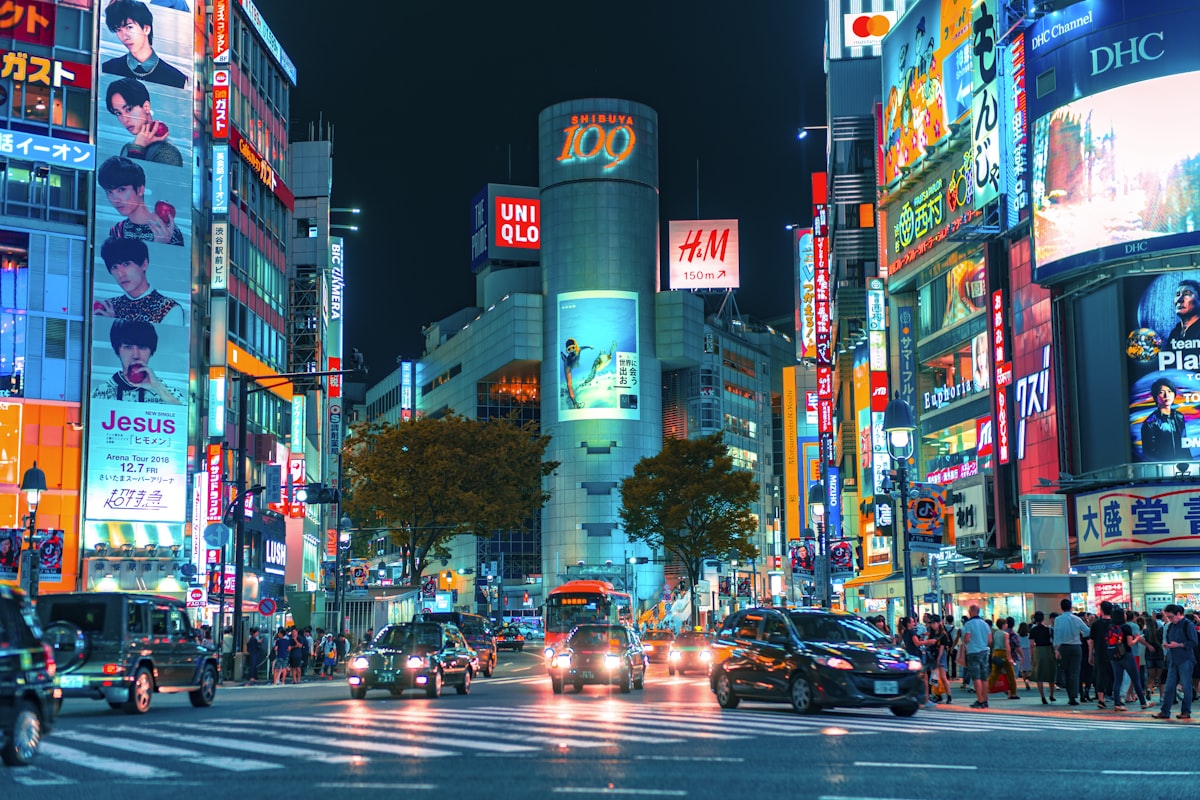
Tokyo is not a single city with a center. It is a constellation of neighborhoods, each with its own personality, food culture, and rhythm. Shibuya feels nothing like Yanaka. Akihabara has zero overlap with Daikanyama. Understanding this is the key to enjoying Tokyo — do not try to “see Tokyo.” Instead, pick neighborhoods that match your interests and explore them deeply.
How to Use This Guide
Each neighborhood includes:
- Vibe — What it feels like to walk there
- Best for — The type of traveler who will love it most
- Don’t miss — The one thing you must do
- Time needed — How long to spend
- Nearest station — Where to get off
The Essential Five
1. Shibuya (渋谷)
Vibe: Controlled chaos. Neon, crowds, energy. The beating heart of young Tokyo.
Best for: First-time visitors, nightlife, shopping, people-watching.
Don’t miss: Stand at the Shibuya Crossing and watch the scramble. Then go up to Shibuya Sky (¥2,000) or the free Hikarie observation floor for the aerial view.
Walk this route: Shibuya Crossing → Center-gai → Spain-zaka → Shibuya Sky → Nonbei Yokocho (tiny bar alley, hidden behind the station).
Eat here: Genki Sushi (conveyor belt, budget) or any gyudon chain for quick fuel.
Time needed: 2-3 hours. Evening is best.
2. Shinjuku (新宿)
Vibe: Tokyo at maximum volume. The busiest station in the world (3.5 million daily users). Skyscrapers on the west, neon chaos on the east.
Best for: Nightlife, food, views, experiencing Tokyo’s overwhelming scale.
Don’t miss: Omoide Yokocho (Memory Lane) — a narrow alley of tiny yakitori and ramen bars under the train tracks. Smoky, atmospheric, unforgettable.
Walk this route: West exit → Tokyo Metropolitan Government Building (free 45th-floor views) → walk east through the station → Kabukicho → Golden Gai → Omoide Yokocho.
Eat here: Fuunji (tsukemen dipping ramen, legendary), any yakitori stall in Omoide Yokocho.
Time needed: 3-4 hours. Go after dark.
3. Asakusa (浅草)
Vibe: Old Tokyo. Traditional, slow, tourist-friendly but genuinely historic.
Best for: First-time visitors, temple culture, traditional shopping, street food.
Don’t miss: Senso-ji at 6 AM, before the crowds arrive. The Kaminarimon gate and Nakamise street are empty and beautiful in early morning light.
Walk this route: Kaminarimon → Nakamise-dori → Senso-ji → Asakusa Culture Tourist Center (free rooftop view) → walk along the Sumida River toward Skytree.
Eat here: Melon pan (crispy sweet bread) from stalls on Nakamise. Tempura at Daikokuya (expect a line).
Time needed: 2-3 hours. Morning is best.
4. Harajuku & Omotesando (原宿・表参道)
Vibe: Two neighborhoods in one. Harajuku is youth fashion chaos (Takeshita Street). Omotesando is luxury retail elegance (Tokyo’s Champs-Elysees).
Best for: Fashion lovers, architecture fans, Instagram content, crepes and street style.
Don’t miss: Walk from chaotic Takeshita Street directly into the peaceful forest path of Meiji Shrine. The contrast is remarkable.
Walk this route: Harajuku Station → Takeshita Street → Meiji Shrine → Omotesando boulevard → Cat Street (back streets with indie shops) → Omotesando Hills.
Eat here: Crepes on Takeshita Street (¥400-600). For lunch, walk to Omotesando for better restaurants.
Time needed: 3-4 hours. Afternoon on Sunday is peak people-watching.
5. Akihabara (秋葉原)
Vibe: Anime, manga, gaming, electronics. Sensory overload in the best way.
Best for: Anime/manga fans, gamers, electronics shoppers, anyone who loves Japanese pop culture.
Don’t miss: Multi-floor arcades (try the claw machines and rhythm games). Yodobashi Camera for electronics. Mandarake for vintage manga.
Walk this route: Akihabara Station Electric Town exit → main strip (Chuo-dori) → side streets for specialty shops → arcades → Radio Kaikan building.
Eat here: Themed cafes are the experience here (maid cafes, etc.), but for actual good food, walk to Kanda (one station away) for soba noodles.
Time needed: 2-4 hours depending on interest level.
The Hidden Gems
6. Yanaka (谷中)
Vibe: Old Tokyo that survived the war and earthquakes. Wooden houses, small temples, cats everywhere.
Best for: Photography, quiet exploration, traditional culture, escaping tourist crowds.
Don’t miss: Yanaka Ginza shopping street at sunset. The view from the top of the Yuyake Dandan (Sunset Stairs) is beautiful.
Walk this route: Nippori Station → Yanaka Cemetery (peaceful walk, cherry blossoms in spring) → small temples → Yanaka Ginza → Nezu Shrine.
Eat here: Menchi katsu (fried meat patty) from shops on Yanaka Ginza. ¥200-300.
Time needed: 2-3 hours. Afternoon.
7. Shimokitazawa (下北沢)
Vibe: Bohemian, artsy, indie. Tokyo’s answer to Portland or Shoreditch.
Best for: Vintage clothing, live music, craft coffee, people who hate mainstream tourism.
Don’t miss: The vintage clothing stores. Shimokitazawa has the highest concentration in Tokyo. Prices are reasonable compared to Harajuku.
Walk this route: Shimokitazawa Station → north side vintage shops → south side cafes and theaters → Bonus Track (a converted railway space with indie shops).
Eat here: Any of the small curry shops. Shimokitazawa has an inexplicable concentration of excellent curry restaurants.
Time needed: 2-3 hours. Weekday afternoons are relaxed; weekends are busier.
8. Koenji (高円寺)
Vibe: Punk rock meets thrift shopping. Tokyo’s most counter-cultural neighborhood.
Best for: Vintage clothing hunters, live music fans, people who want to see where actual young Tokyoites hang out.
Don’t miss: The covered shopping arcades (shotengai) filled with secondhand clothing, record stores, and cheap izakaya.
Eat here: Standing bars (tachinomi) for cheap beer and snacks. Koenji specializes in affordable drinking.
Time needed: 2 hours. Evening.
9. Daikanyama & Nakameguro (代官山・中目黒)
Vibe: Stylish, calm, upscale but not flashy. Where Tokyo’s creative professionals live.
Best for: Design lovers, bookstore enthusiasts, cherry blossom season (Nakameguro is THE spot).
Don’t miss: Tsutaya Books Daikanyama — one of the most beautiful bookstores in the world. Browse for hours.
Walk this route: Daikanyama Station → Tsutaya Books → walk to Nakameguro (15 min) → Meguro River path → independent boutiques and cafes.
Eat here: The riverside cafes in Nakameguro are perfect for a long lunch.
Time needed: 2-3 hours. Afternoon.
10. Kagurazaka (神楽坂)
Vibe: Former geisha district. French-Japanese cultural blend (many French residents). Narrow cobblestone alleyways hiding excellent restaurants.
Best for: Food lovers, hidden alleys exploration, French-Japanese culture fusion.
Don’t miss: The side alleys (yokocho). Step off the main slope into the narrow paths and discover hidden restaurants, small shrines, and traditional ryotei.
Walk this route: Iidabashi Station → Kagurazaka slope → duck into every side alley → Akagi Shrine (modern minimalist design) → Bishamonten temple.
Eat here: French bistros (seriously, some of the best in Tokyo), traditional kaiseki, or street-side crepe shops.
Time needed: 2-3 hours. Evening for restaurant atmosphere.
The Specialist Neighborhoods
11. Tsukiji & Toyosu (築地・豊洲)
Best for: Seafood, sushi, morning food markets.
Tsukiji Outer Market remains a vibrant food street (the inner market moved to Toyosu). Come hungry at 9 AM and graze through tamagoyaki (egg omelet), fresh uni (sea urchin), grilled scallops, and sushi. Toyosu Market has a free viewing gallery to watch the tuna auction (arrive by 6 AM).
12. Jimbocho (神保町)
Best for: Book lovers, curry enthusiasts.
The world’s largest concentration of used bookstores. Entire buildings dedicated to specific genres: art, maps, ukiyo-e prints, photography, manga. Also famous for old-school Japanese curry shops — the student neighborhood vibe keeps prices affordable.
13. Ueno (上野)
Best for: Museums, parks, budget accommodation, authentic market energy.
Ueno Park contains the Tokyo National Museum, National Museum of Western Art, and the zoo. Ameyoko market nearby is bustling and affordable. The area around Ueno Station has some of Tokyo’s cheapest hotels and hostels.
14. Odaiba (お台場)
Best for: Families, tech enthusiasts, bay views, rainy day activities.
An artificial island in Tokyo Bay with malls, a life-size Gundam statue, teamLab Borderless digital art museum, and bay-side walks. Feels different from all other Tokyo neighborhoods — spacious, modern, waterfront. The Yurikamome monorail ride from Shimbashi is scenic.
15. Yurakucho & Shinbashi (有楽町・新橋)
Best for: After-work izakaya culture, yakitori, seeing salaryman Tokyo.
The elevated train tracks between Yurakucho and Shinbashi stations house dozens of tiny yakitori joints and standing bars. This is where office workers decompress after work with cheap beer and grilled chicken. Authentic, unpretentious, and surprisingly welcoming to visitors.
Building Your Day
Culture + Traditional
Asakusa (morning) → Yanaka (afternoon) → Kagurazaka (dinner)
Fashion + Youth Culture
Harajuku (morning) → Shibuya (afternoon) → Shimokitazawa (evening)
Food-Focused Day
Tsukiji (breakfast) → Ueno/Ameyoko (lunch) → Yurakucho (dinner)
Design + Calm
Daikanyama (morning) → Nakameguro (lunch) → Omotesando (afternoon)
Anime + Pop Culture
Akihabara (morning-afternoon) → Ikebukuro Otome Road (late afternoon) → Shinjuku (evening)
Getting Between Neighborhoods
Tokyo’s train system connects every neighborhood in this guide within 30 minutes. The Yamanote Line (the circular green line) hits Shibuya, Shinjuku, Harajuku, Ueno, Akihabara, and Tokyo Station. Master this single line and you can reach almost everywhere.
Use a Suica or Pasmo IC card. Tap in, tap out. No need to figure out fares. The card works on all trains, subways, and buses in Tokyo.