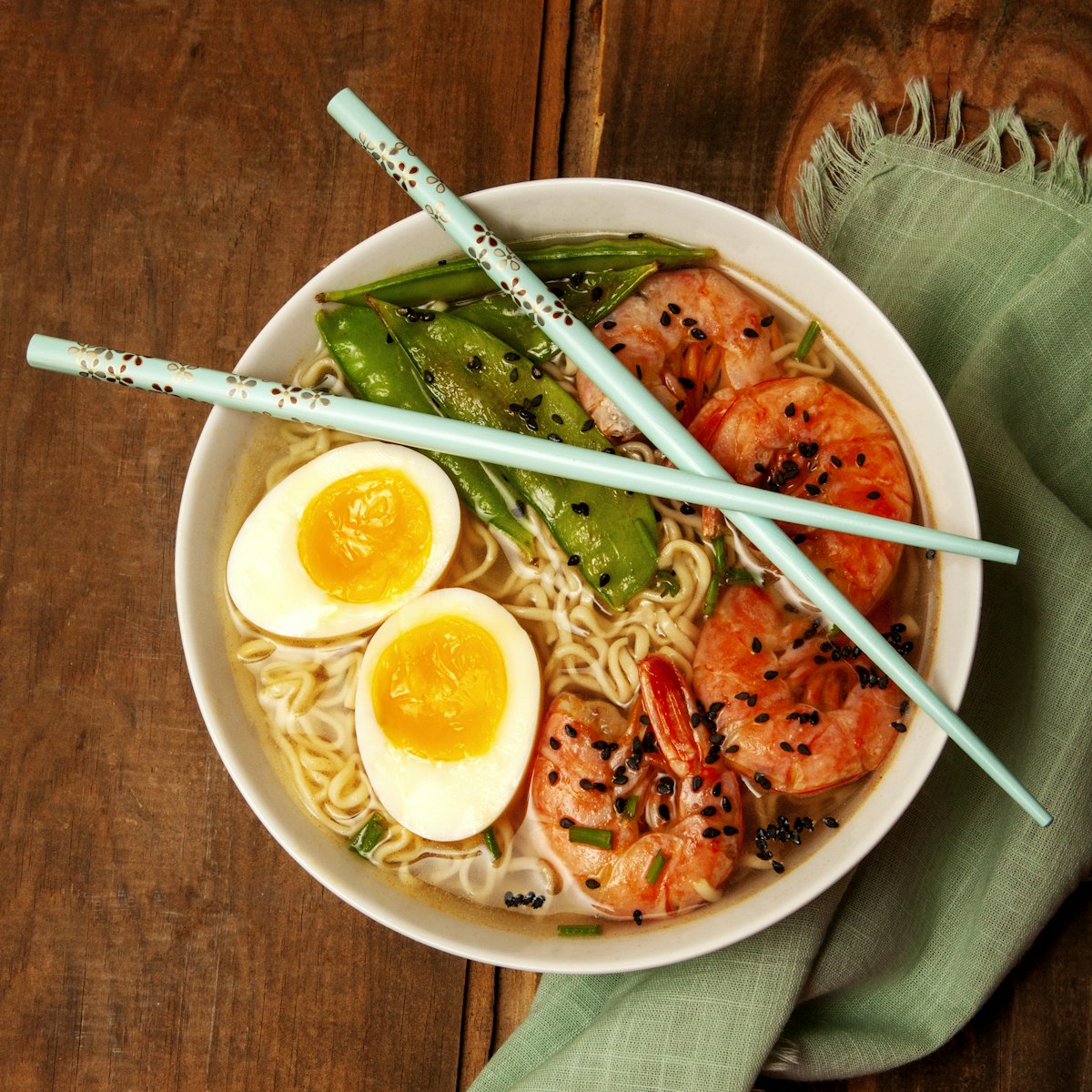
Japan has more Michelin-starred restaurants than any other country. But the best food in Japan is not in expensive restaurants. It is in the ¥800 ramen shop with no English menu, the ¥150 onigiri from 7-Eleven, and the ¥500 curry at a chain restaurant where salarymen eat lunch.
The Essential 20
1. Ramen (ラーメン) — ¥800-1,200
Not the instant kind. Japanese ramen is a complex, deeply flavored soup with fresh noodles. The four main styles:
- Shoyu (醤油) — Soy sauce base. Clear, savory. Tokyo style
- Miso (味噌) — Fermented soybean paste. Rich, hearty. Sapporo style
- Tonkotsu (豚骨) — Pork bone broth. Creamy, white. Fukuoka style
- Shio (塩) — Salt base. Light, delicate. Hakodate style
How to order: Many ramen shops use a ticket machine (食券機) at the entrance. Put in money, press the button for your ramen, hand the ticket to the cook.
2. Sushi (寿司) — ¥110-500/plate
Conveyor belt sushi (回転寿司) is the best value. Chains like Sushiro, Kura Sushi, and Hamazushi serve excellent sushi at ¥110-180 per plate. Touch-screen ordering in multiple languages.
Standing sushi (立ち食い寿司) near train stations offers quick, fresh sushi at reasonable prices.
3. Udon (うどん) — ¥400-900
Thick, chewy wheat noodles in broth. Simpler than ramen but equally satisfying. Self-service udon chains like Marugame Seimen let you choose toppings cafeteria-style.
4. Soba (そば) — ¥600-1,200
Thin buckwheat noodles, served hot in broth or cold on a bamboo mat (zaru soba). Dip cold soba in the tsuyu sauce. At the end, pour the starchy cooking water (soba-yu) into the remaining sauce and drink it.
5. Tonkatsu (とんかつ) — ¥1,000-1,800
Breaded, deep-fried pork cutlet. Served with shredded cabbage, rice, and miso soup. Grind your own sesame seeds at the table and mix with the tonkatsu sauce.
6. Curry Rice (カレーライス) — ¥500-900
Japanese curry is nothing like Indian curry. It is thick, mild, sweet, and deeply comforting. CoCo Ichibanya is the largest chain — you choose spice level (1-10), rice amount, and toppings.
7. Gyudon (牛丼) — ¥400-600
Simmered beef and onion over rice. Japan’s ultimate fast food. Yoshinoya, Matsuya, and Sukiya serve it 24/7 for under ¥500. Add a raw egg on top for the authentic experience.
8. Tempura (天ぷら) — ¥800-2,000
Lightly battered and deep-fried vegetables and seafood. The batter should be thin and crispy, never heavy. Tendon (tempura rice bowl) is the most common way to eat it.
9. Yakitori (焼き鳥) — ¥100-300/skewer
Grilled chicken skewers. Order “shio” (salt) or “tare” (sweet soy glaze). The best yakitori places are tiny, smoky bars under train tracks. Try every part: thigh, breast, skin, liver, heart, cartilage.
10. Okonomiyaki (お好み焼き) — ¥800-1,500
A savory pancake filled with cabbage, meat, and seafood, topped with sauce, mayo, and bonito flakes. Osaka style mixes everything together. Hiroshima style layers ingredients with noodles.
11. Takoyaki (たこ焼き) — ¥500-800
Ball-shaped octopus fritters. Crispy outside, creamy inside with a piece of octopus in the center. Street food from Osaka, now everywhere.
12. Onigiri (おにぎり) — ¥120-200
Rice balls with various fillings, wrapped in seaweed. The ultimate grab-and-go food. Available at every convenience store, 24 hours a day.
13. Unagi (うなぎ) — ¥2,000-4,000
Grilled freshwater eel glazed with sweet sauce over rice (unaju or unadon). Expensive but unforgettable. Traditionally eaten in summer for energy.
14. Yakiniku (焼肉) — ¥2,000-5,000
Japanese BBQ — grill your own meat at the table. All-you-can-eat (tabehoudai) options offer incredible value at ¥2,500-3,500 for 90 minutes.
15. Shabu-Shabu (しゃぶしゃぶ) — ¥2,000-4,000
Swish thin slices of meat in hot broth at your table, then dip in ponzu or sesame sauce. Light, elegant, and social.
16. Kaiseki (懐石) — ¥5,000-30,000
Multi-course Japanese haute cuisine. Seasonal ingredients prepared with extraordinary technique and presentation. Best experienced at a ryokan.
17. Taiyaki (たい焼き) — ¥200-300
Fish-shaped pastry filled with sweet red bean paste (anko), custard, or chocolate. A classic street snack.
18. Matcha Desserts — ¥300-800
Green tea flavored everything: ice cream, cake, latte, tiramisu, Kit-Kats. Uji (near Kyoto) is the matcha capital with the best quality.
19. Wagashi (和菓子) — ¥200-500
Traditional Japanese sweets made from rice flour, red bean paste, and seasonal ingredients. Beautiful, artistic, and not overly sweet. Best enjoyed with green tea.
20. Japanese Breakfast (朝食) — ¥800-1,500
A traditional Japanese breakfast includes grilled fish, rice, miso soup, pickles, natto (fermented soybeans), and tamagoyaki (rolled omelette). Most hotels offer this. Try it at least once.
How to Find Good Restaurants
Tabelog (食べログ)
Japan’s most trusted restaurant review site. Ratings above 3.5 are considered excellent (the scale is stricter than Google). The app is mostly in Japanese, but Google Translate works on the website.
Google Maps
Search in English. Ratings above 4.0 are very reliable in Japan because Japanese reviewers are honest and detailed.
The Plastic Food Rule
Restaurants with plastic food displays (sampuru) in their window are designed for easy ordering — point at what you want. These are not tourist traps. Many excellent restaurants use them.
Follow the Salarymen
At lunch, look for restaurants with lines of office workers in suits. They know where the good ¥800 lunches are.
Dietary Restrictions
Vegetarian/Vegan
Challenging but improving. Dashi (fish stock) is in almost everything. “Shojin ryori” (Buddhist temple cuisine) is fully plant-based. In Tokyo and Kyoto, dedicated vegetarian restaurants are increasing.
Useful phrase: “Niku to sakana nashi de onegai shimasu” (肉と魚なしでお願いします) — No meat or fish, please.
Halal
Growing availability, especially in Tokyo. Halal ramen, yakiniku, and bento are available. The “Halal Gourmet Japan” app lists certified restaurants.
Gluten-Free
Difficult. Soy sauce contains wheat, and it is in everything. Rice-based dishes (sushi, onigiri, curry rice) are your safest options. Bring a translation card explaining your needs.
Allergies
Major allergens are labeled on packaged foods. For restaurants, a printed allergy card in Japanese is extremely helpful. Staff will take it seriously.
Budget Tips
- Lunch is cheaper. The same restaurant often charges 30-50% less for lunch sets compared to dinner
- Conveyor belt sushi is exceptional value — ¥1,000-2,000 for a full meal
- Convenience stores for breakfast and snacks — quality rivals many restaurants
- Supermarket bento after 6 PM get 20-50% discount stickers
- Chain restaurants (Yoshinoya, Matsuya, CoCo Ichibanya) are reliable and cheap
- Free water and tea. Most restaurants serve free water or green tea. No tipping required